Every pool has an interior finish—plaster, quartz, pebble or a fiberglass gel coat—that sits between the water and the shell underneath. That finish is a wear layer, not a permanent part of the pool.
Florida sun, salt systems, unbalanced chemistry and years of brushing slowly erode it. Resurfacing removes the failing layer and installs a fresh one, which restores the waterproof barrier as much as the appearance.
It is also the natural moment to update details: a new waterline tile, a different finish color, or a smoother pebble blend that is easier on feet.
Real pools we've worked on
Worn surfaces, and what a new finish looks like
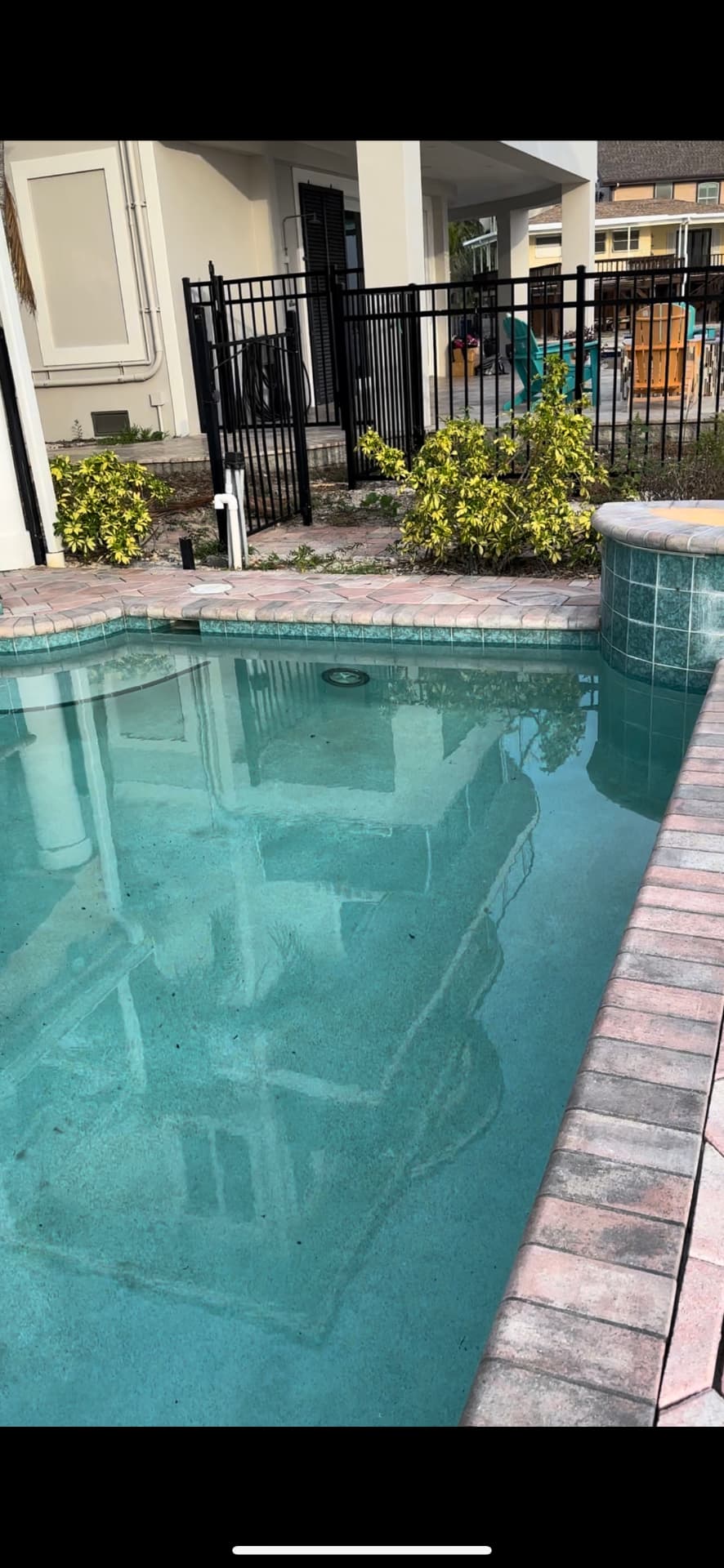
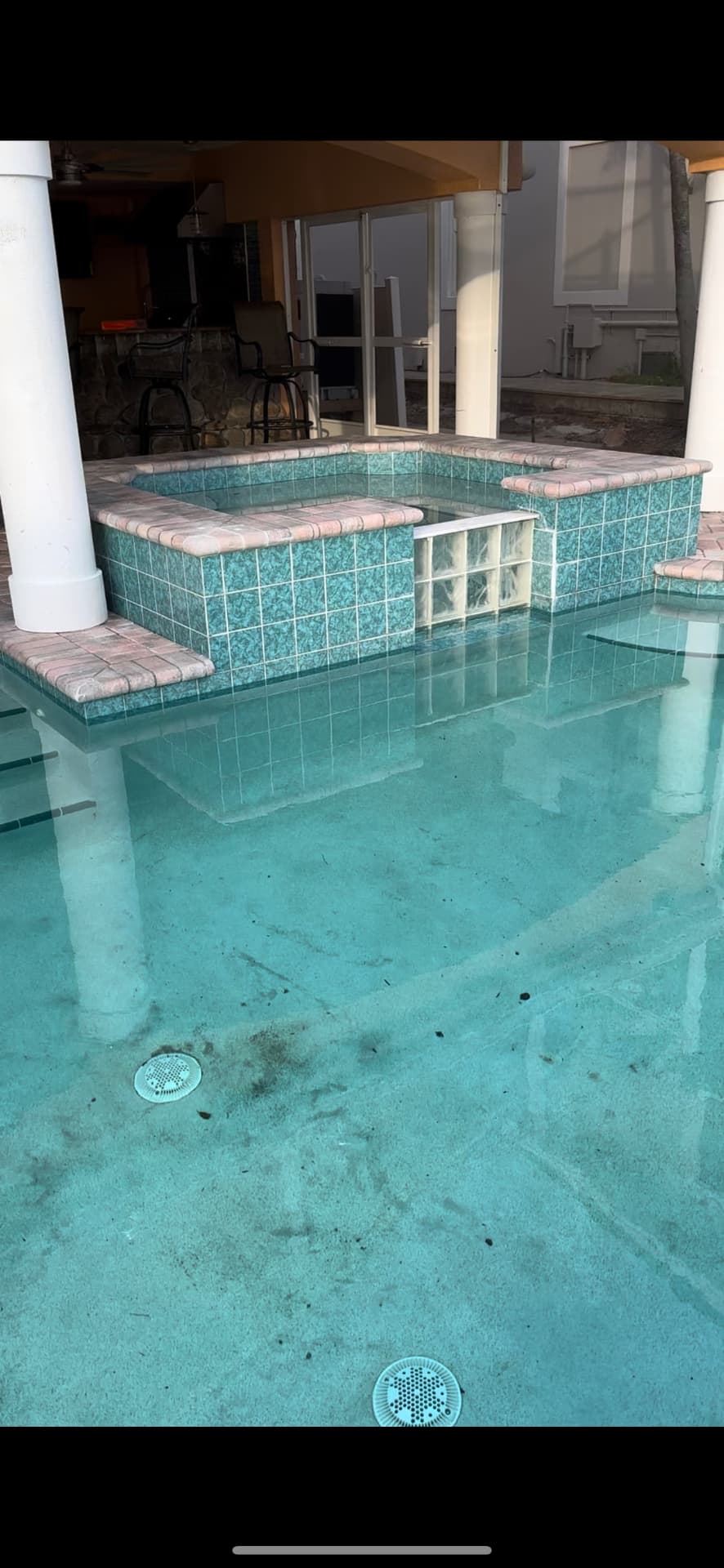
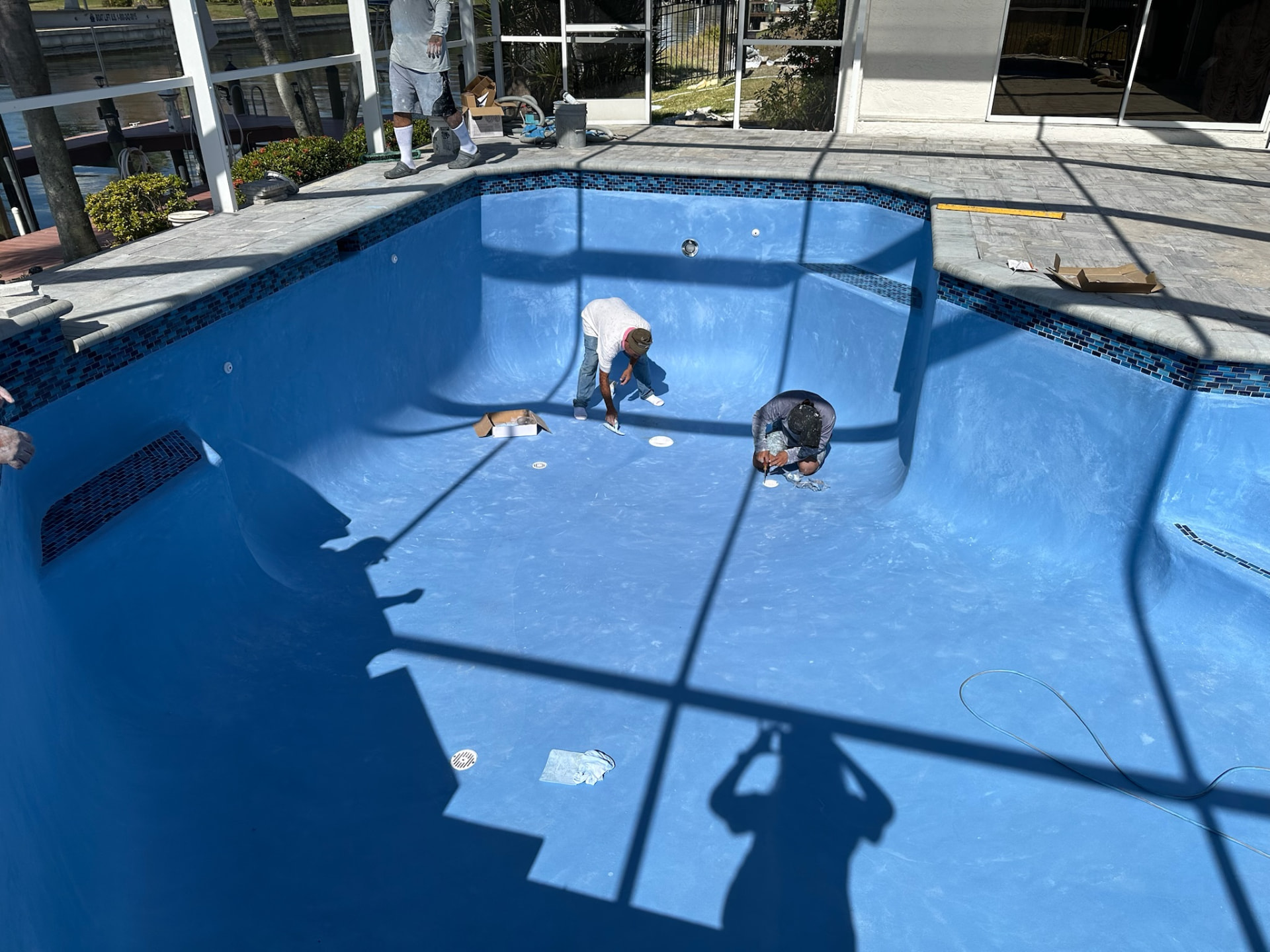
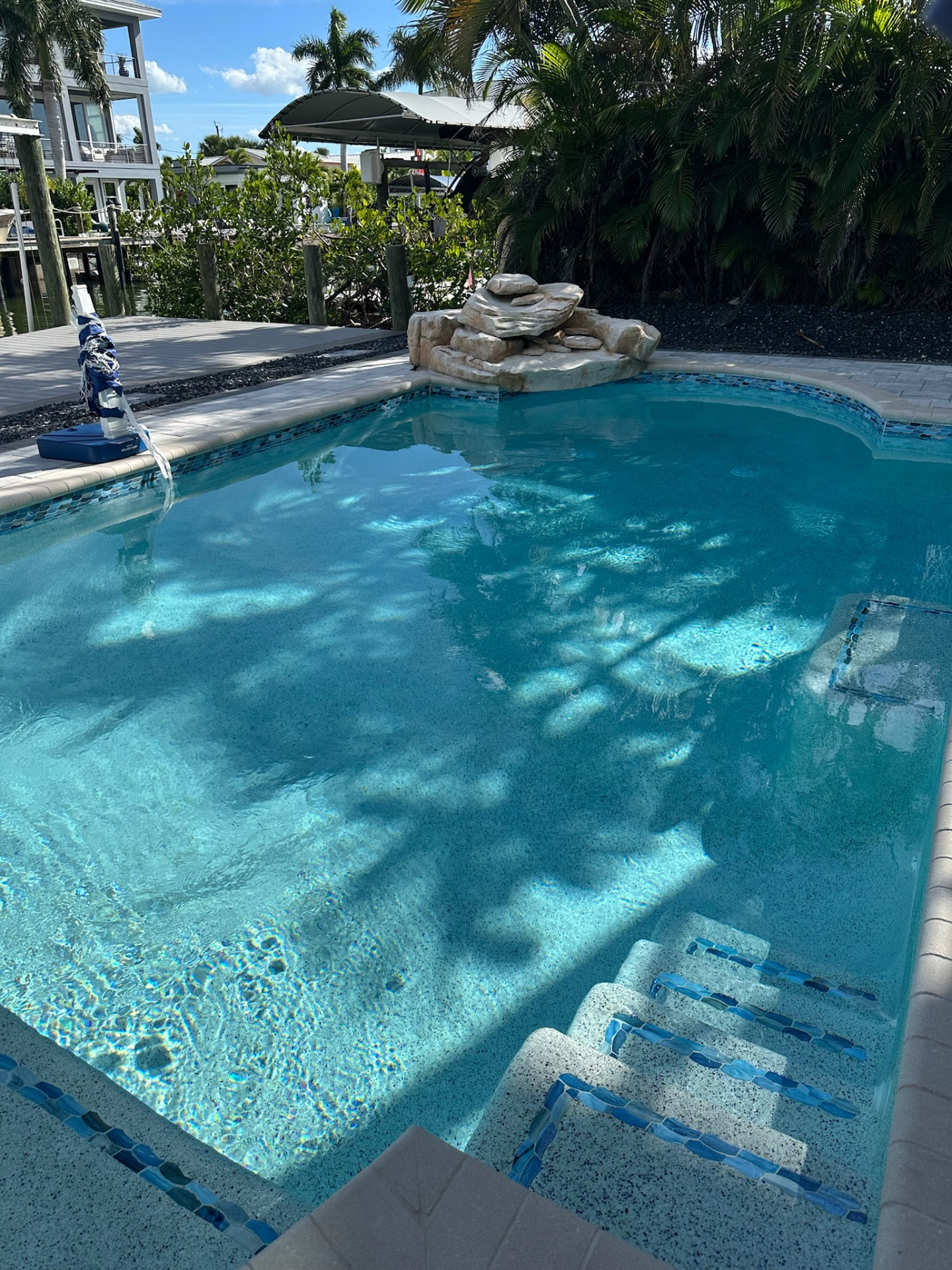
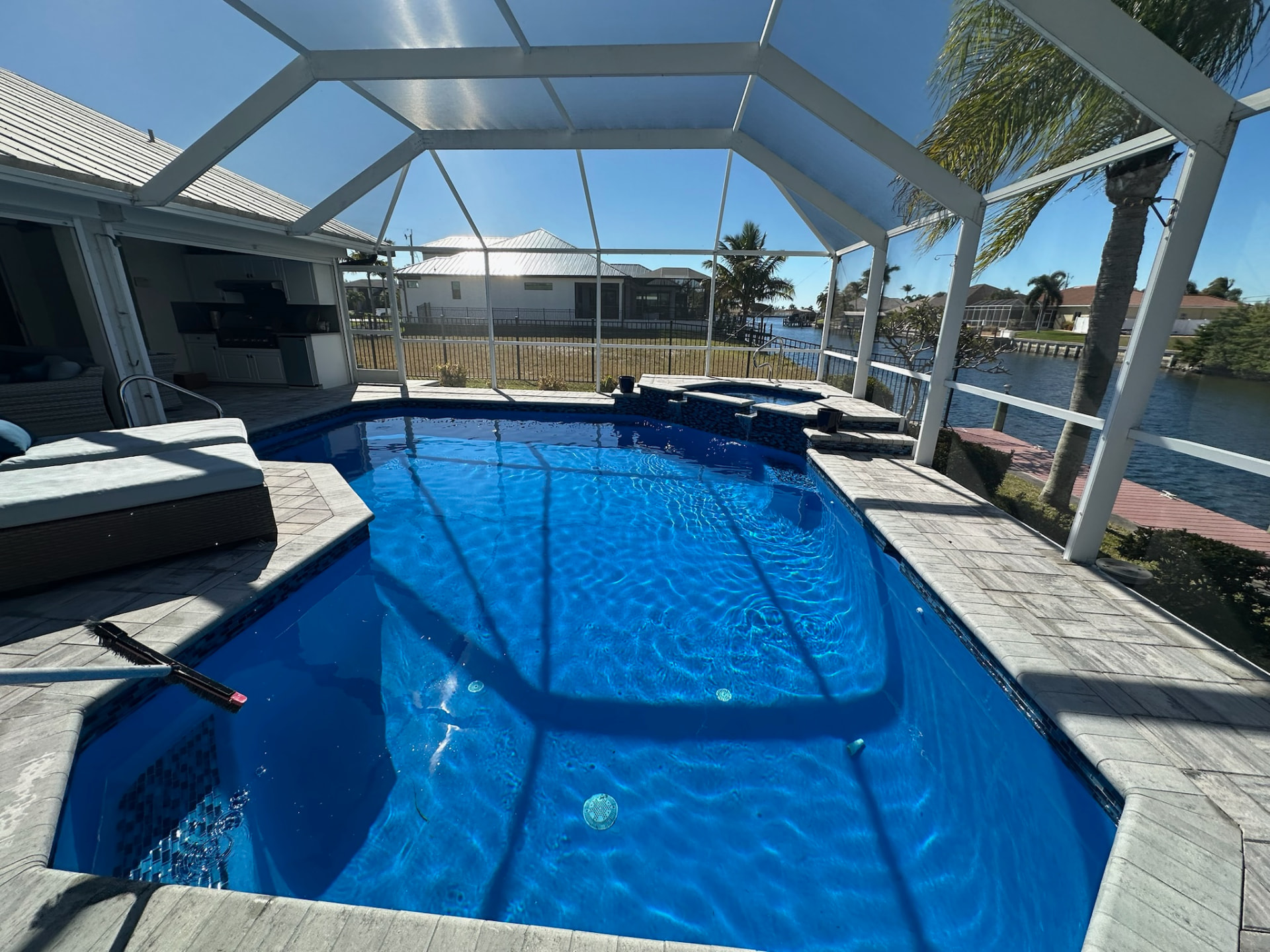
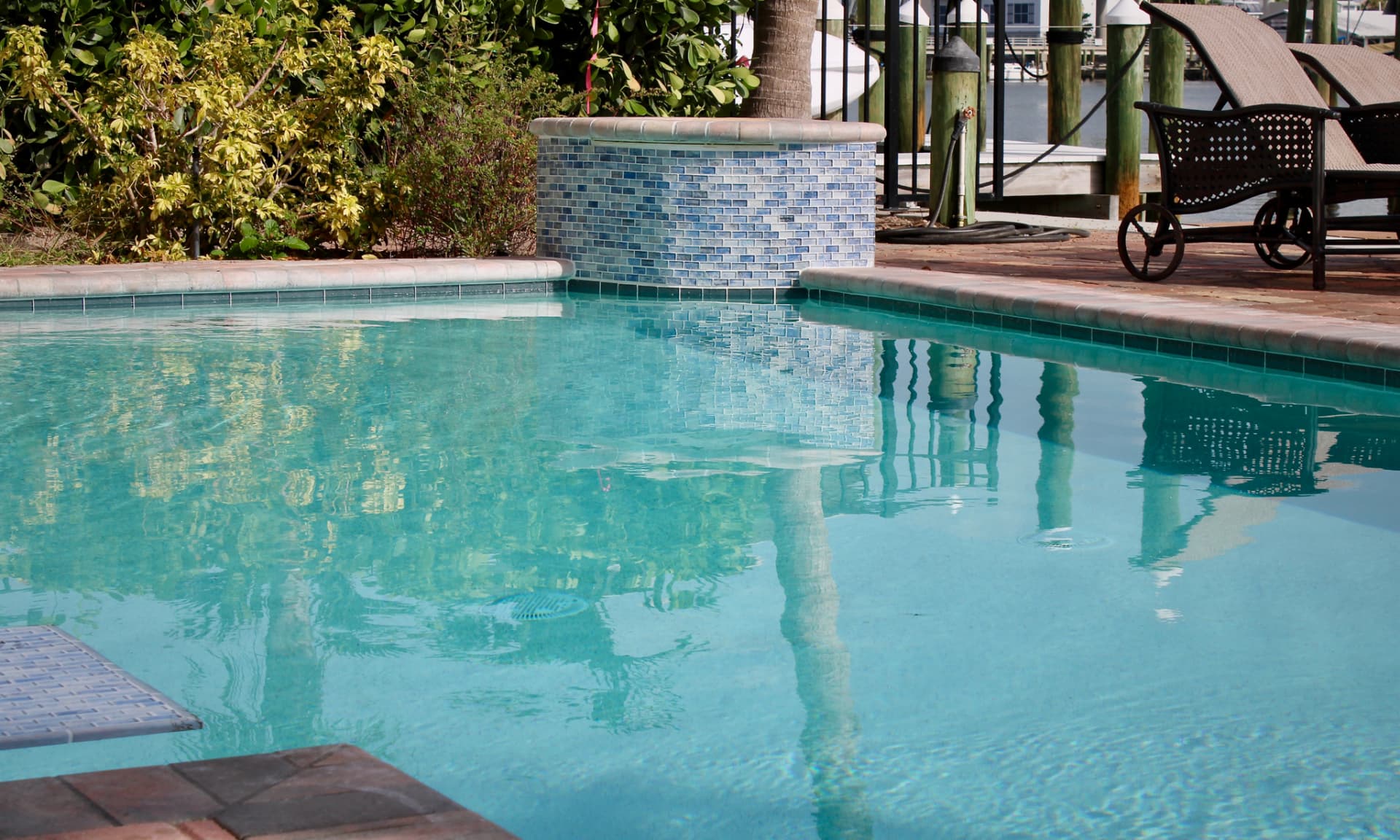
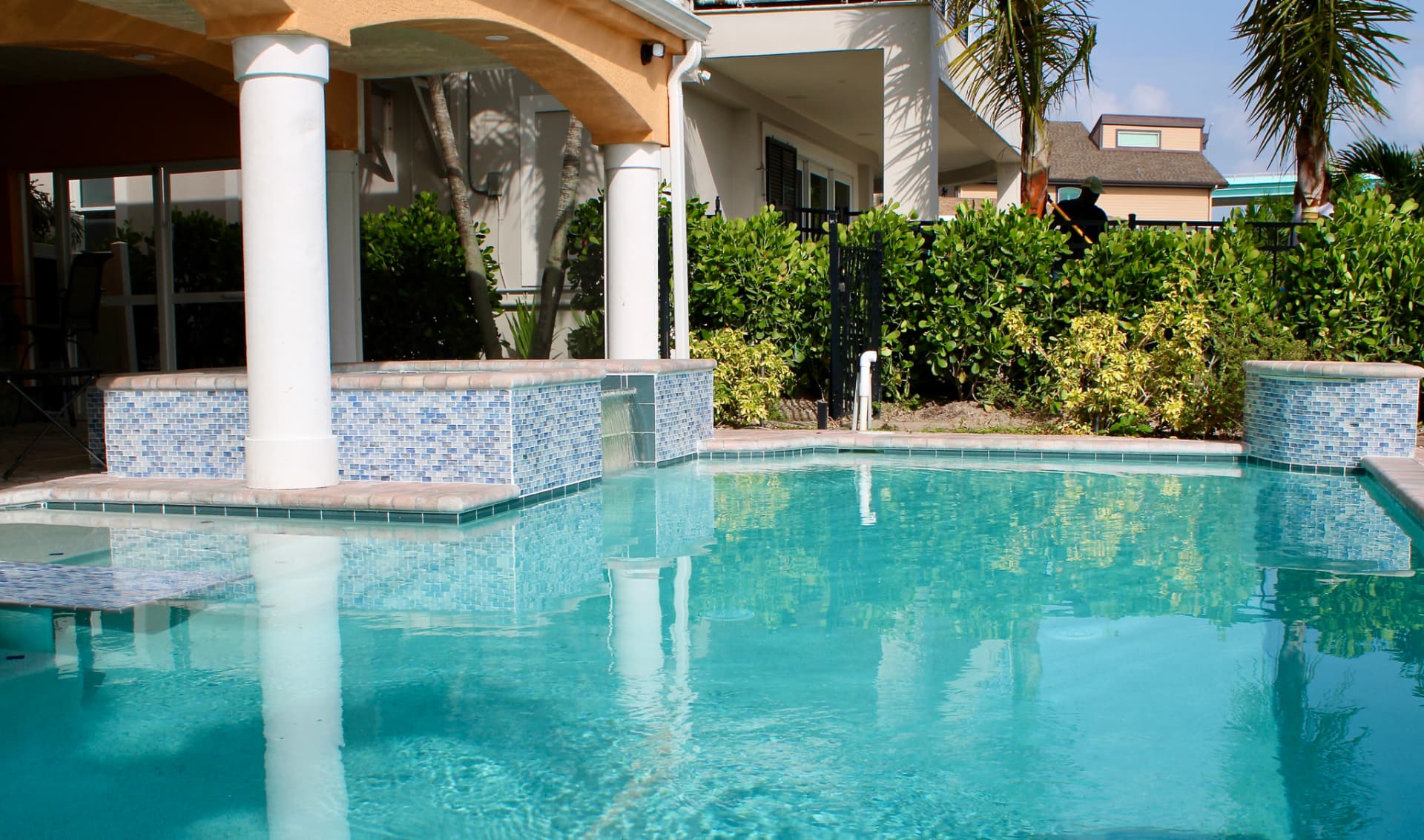
Rough, stained, chipping plaster does not mean the pool is finished. Once the old surface comes out and a new interior goes in, the shell you already own looks and feels brand new. These are photos from our own projects around Southwest Florida.
Ready for resurfacing — worn, stained interiorReady for resurfacing — heavy discolorationDuring — our crew applying the new interiorAfter — new finish, tile and step accentsAfter — deep blue interior finishAfter — new interior finish and waterline tileAfter — finished surface, spillover feature
Finish options
See how each finish actually looks underwater
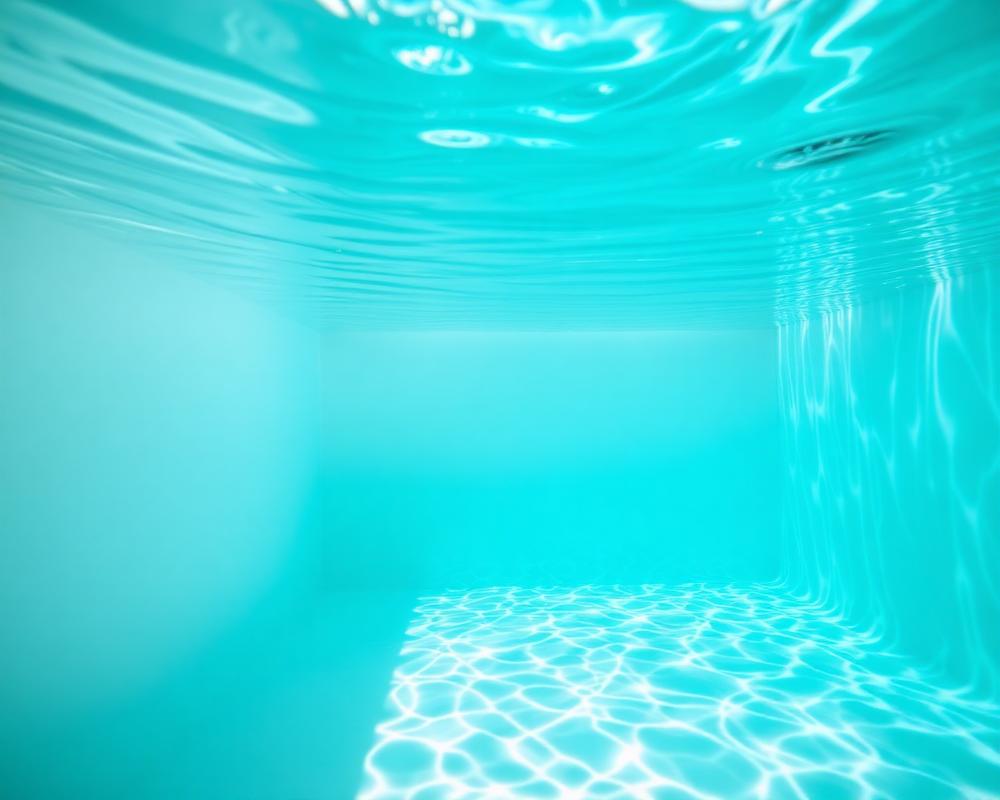
A dry sample board never tells the whole story. The color of your pool comes from the finish seen through the water. These are the two interior finishes we start most homeowners with.
Classic
White Finish
Water color: Bright turquoise / light aqua
A white interior reflects the most sunlight, so the water reads bright and tropical. It makes the pool feel larger and shallower, shows off clarity, and keeps the backyard feeling open and resort-like.
•Brightest, most classic Florida pool look
•Water appears lighter and more inviting in shade
•Makes leaves and debris easy to spot and remove
Our preferred option
Blue Finish
Water color: Deep sapphire / rich lagoon blue
A blue interior absorbs more light and gives the water a deep, saturated color, even on cloudy days. It is the finish we recommend most often because it hides normal surface wear and staining far better over the life of the pool.
•Richer color that holds up in every light
•Hides mineral staining and everyday wear
•Pairs well with dark tile, pavers and lighting
Other finishes, aggregates and tile combinations are available — we walk through them in person once we see your pool, your screen enclosure and how much sun the water gets.
Signs you need it
What homeowners notice
•Rough, sandpaper-like walls and steps that scrape feet and swimsuits
•Stains, mottling or dark blotches that keep coming back after cleaning
•Visible chips, flaking plaster or exposed grey shell underneath
•Persistent water loss with no plumbing leak found
•The finish is 10-15+ years old and has never been replaced
Our process
What Eden does
1
Inspection and finish selection
We look at the existing surface, water chemistry history and shell condition, then walk through finish options and colors with you.
2
Drain and surface prep
The pool is drained and the old finish is chipped or hydro-prepped back to a sound bonding surface. Weak spots in the shell are repaired first.
3
Tile and detail work
Waterline tile, coping and fittings are addressed while the pool is empty—this is the easiest time to do it.
4
New finish application
The new finish is troweled in, and pebble finishes are exposed and washed to reveal the aggregate.
5
Fill and start-up
The pool is filled immediately and put through a start-up chemistry routine. We explain exactly what to do—and not do—during the first month while the finish cures.
Good to know
Common questions
How long does it take?
Most residential resurfacing runs about one to two weeks from drain to fill, depending on tile work and weather.
How long will the new surface last?
Standard plaster typically lasts 7-12 years; quartz and pebble finishes commonly last 15-20 years with balanced water.
What affects the cost?
Pool size, the finish material you choose, how much of the old surface has to be removed, and whether tile, coping or structural repairs are included.