
Leak Detection
Finding exactly where a pool is losing water—shell, fittings, plumbing or equipment—before anything gets dug up.
Understanding leak detection
Southwest Florida pools lose roughly a quarter to a half inch of water a day to evaporation. Beyond that, you likely have a leak—and a leak costs you water, chemicals, heat and eventually soil under the deck.
Detection is a process of elimination: pressure-testing plumbing lines, dye-testing the shell and fittings, and using listening equipment to hear water escaping underground.
The goal is a precise location. Knowing a leak is in one return line, at a light niche, or at a skimmer throat is the difference between a small targeted repair and tearing up a deck.
Do the bucket test before you pay anyone
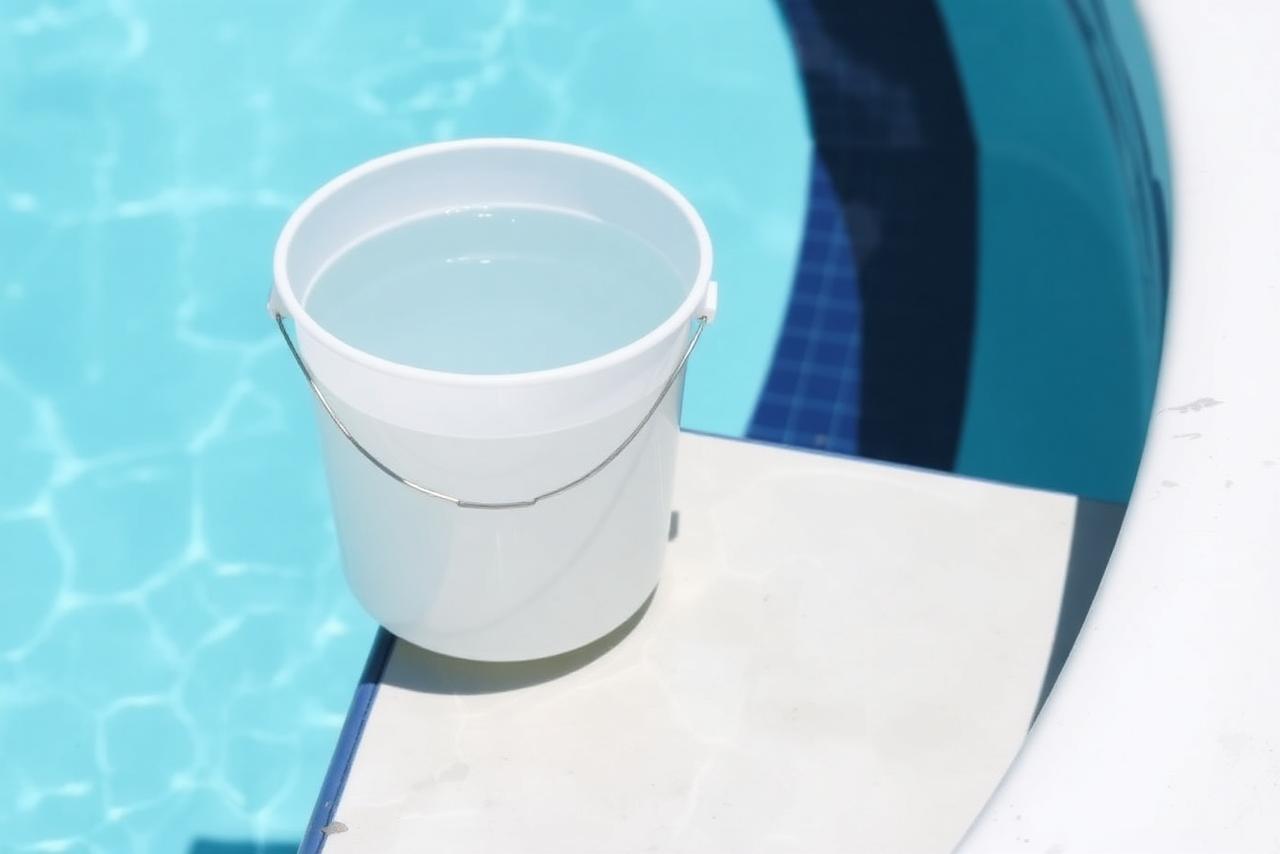
We would rather you spend nothing than spend $350 on a leak detection visit for a pool that isn't leaking. In Southwest Florida heat, an uncovered pool can lose a quarter-inch a day to evaporation alone — and that is enough to convince most homeowners something is wrong. The bucket test costs nothing but a day of patience and it answers the question honestly.
What you'll need
- • A clean 5-gallon bucket
- • A grease pencil, marker, or tape
- • 24 hours of no swimming and no topping off
Rule of thumb: normal evaporation is roughly 1/4 inch per day. Losing more than about 2 inches a week is worth a call.
- 1
Fill the pool to its normal level
Top the water off to the middle of the skimmer opening, exactly where you normally keep it.
- 2
Fill a 5-gallon bucket with pool water
Leave about an inch of space at the top. Using pool water keeps the temperature the same inside and outside the bucket so both evaporate at the same rate.
- 3
Set the bucket on the second step
Place it on a pool step so it is submerged a few inches but still sitting firmly. If it floats, add a brick or weight inside.
- 4
Mark both water lines
Use a grease pencil or a strip of tape to mark the water level inside the bucket and the pool level on the outside of the bucket.
- 5
Wait 24 hours — pump running normally
Run the pool the way you always do. Don't swim, don't backwash, and don't add water during the test.
- 6
Compare the two marks
If both dropped the same amount, that is normal evaporation. If the pool dropped more than the bucket, you likely have a leak.
- 7
Repeat with the pump off
Run the same test a second day with the equipment off. Losing more water with the pump ON usually points to pressure-side plumbing; losing more with it OFF points to the shell, skimmer, or suction side. That single detail saves us real time on site.
Video walkthrough
A short step-by-step video of the bucket test is being filmed at a local job site and will be embedded here.
In the meantime, call us and we'll walk you through it on the phone — no charge, no obligation.
Professional, state-of-the-art leak detection
If the bucket test says your pool really is losing water, the next question is where. We don't break concrete to find out. Eden invests in the same electronic detection equipment used by full-time leak specialists, because finding the leak precisely is what keeps the repair small.
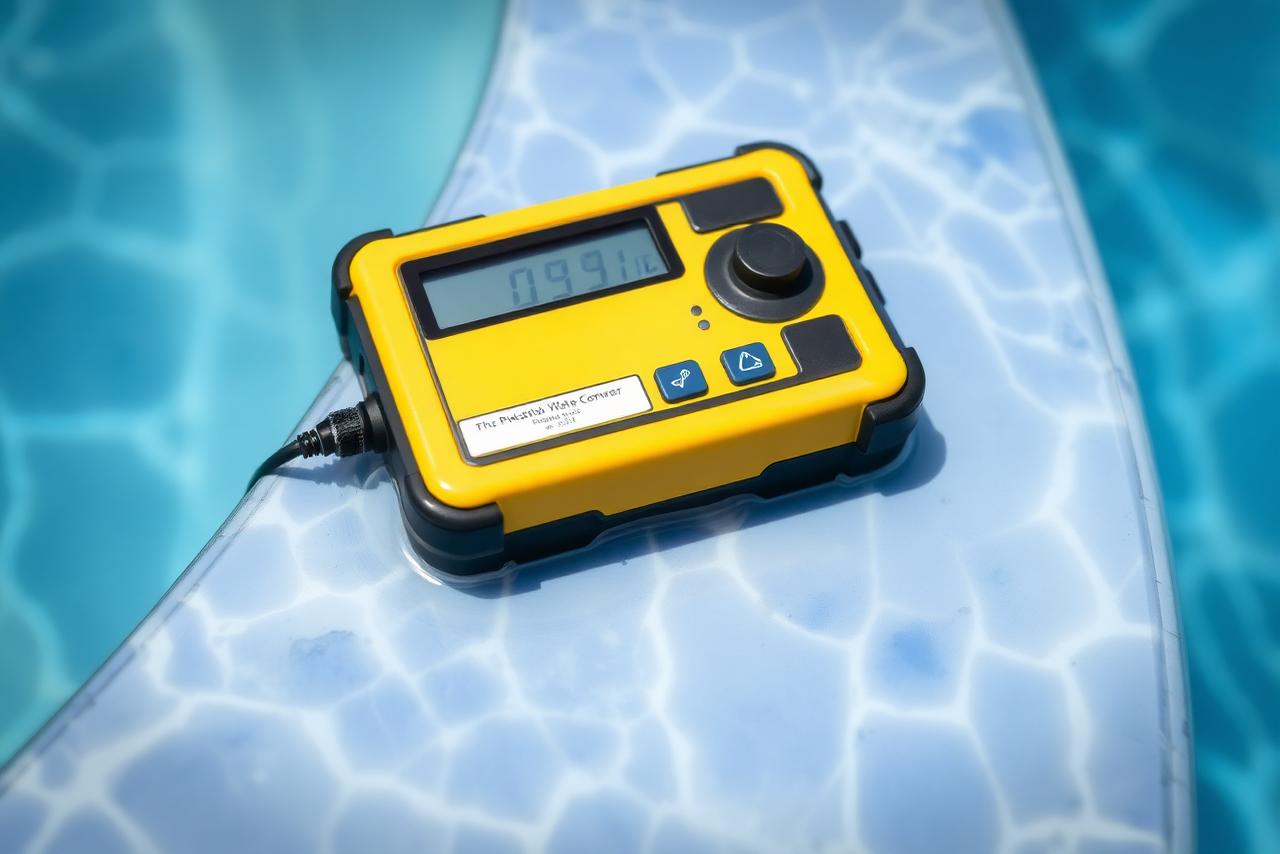
Leakalyzer electronic water-loss sensor
Measures water level change down to 1/10,000 of an inch. In about 15 minutes it tells us whether the pool is truly losing water — something a garden-hose guess never can.
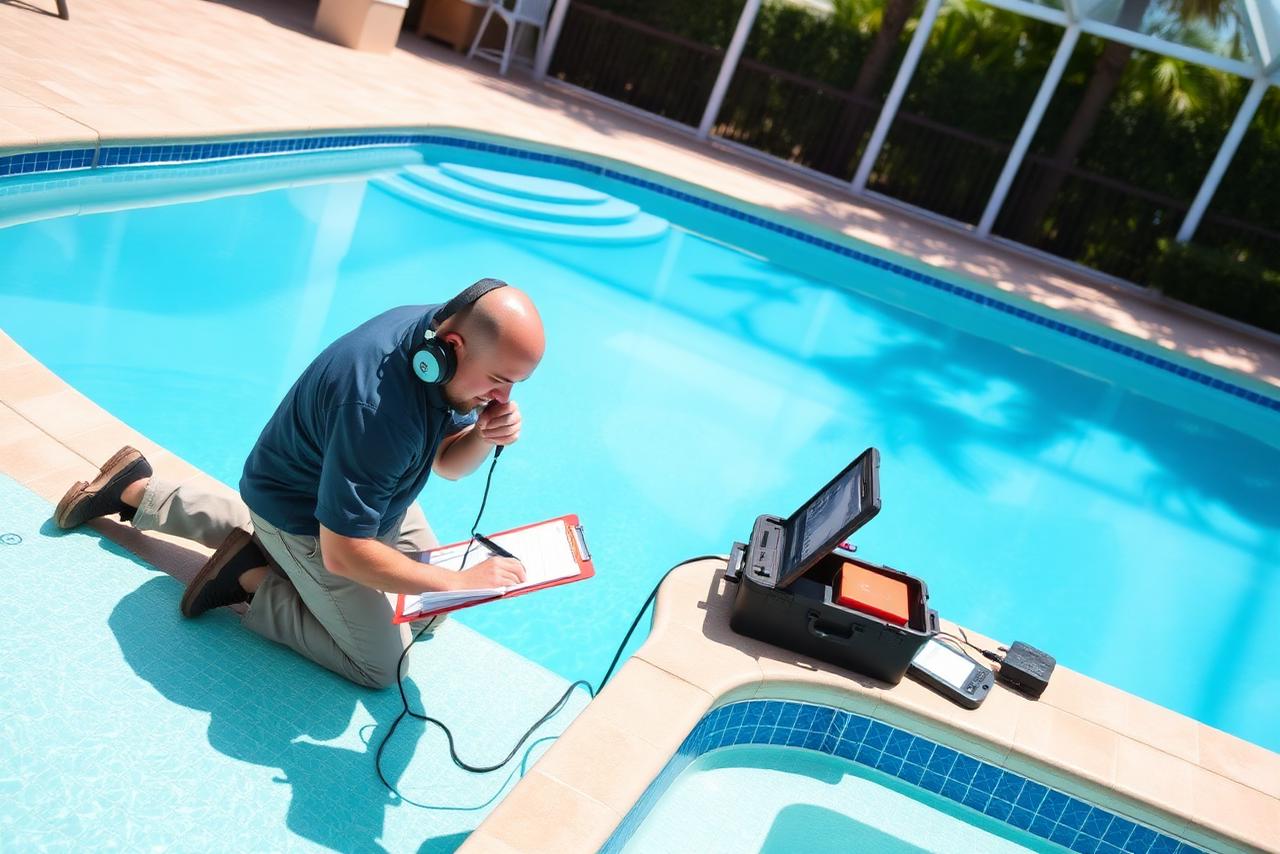
Listening / acoustic gear
Amplified ground microphones let us hear pressurized water escaping a buried line and pinpoint it within inches, so we dig one small hole instead of trenching the deck.
Pressure testing rigs
We isolate and pressurize each individual line — skimmer, main drain, returns, cleaner line — to prove which one is failing rather than guessing.
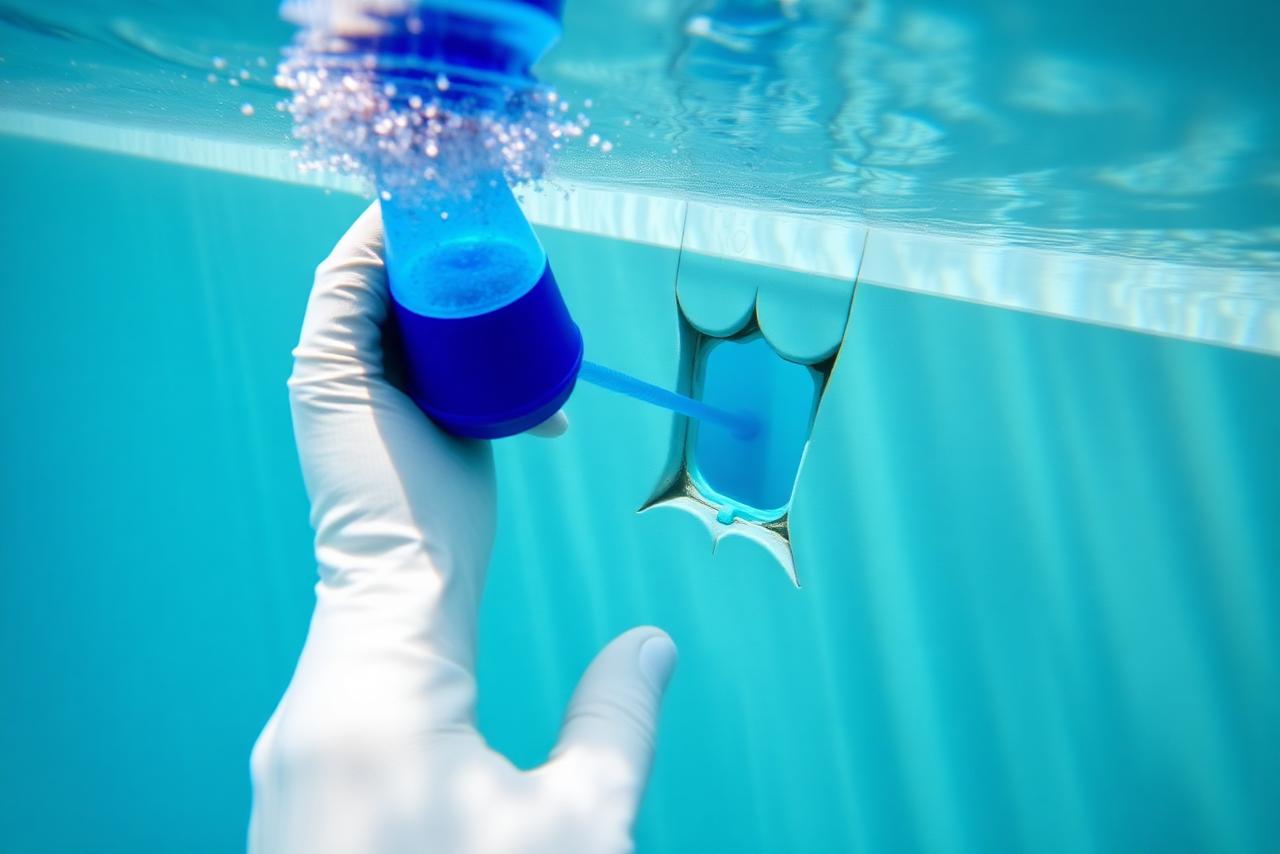
Dye testing & underwater inspection
For shell cracks, light niches, tile lines, and fittings, dye shows exactly where water is pulling through the surface.
Certified leak detection
Our team is trained and certified in electronic pool leak detection and pressure testing, and licensed and insured for pool repair work in Southwest Florida. Certificates are shown on request and travel with the technician.
What homeowners notice
- •Adding water more than once a week, or an auto-fill that runs constantly
- •Water level that keeps dropping and then stops at one particular fitting
- •Soggy or sunken spots in the deck or lawn near the pool
- •Cracked or separated tile, coping or deck joints
- •Chemicals that will not hold no matter how much you add
What Eden does
- 1
Bucket test confirmation
We first confirm the loss exceeds normal evaporation so you are not paying to chase a non-issue.
- 2
Isolate the system
Plugging lines and watching the level tells us quickly whether the loss is in the shell or the plumbing.
- 3
Pressure testing
Each suction and return line is pressure tested individually to identify which one is failing.
- 4
Locate the point
Dye testing, acoustic listening gear and fitting inspection pinpoint the exact spot rather than a general area.
- 5
Repair plan
You get a clear explanation of what leaks, where, what the repair involves, and how much surface has to be disturbed.
Common questions
How long does detection take?
A typical inspection takes a few hours; complex or multiple leaks can take a second visit.
How much loss is normal?
About a quarter to a half inch per day from evaporation. An inch or more daily points to a leak.
What affects the cost?
How many systems have to be tested, whether the leak is under the deck, and the repair method the location requires.
You may also need
Pool Resurfacing
Replacing the worn interior finish of your pool so it feels smooth underfoot, holds water properly and looks new again.
Learn more →Equipment Repairs & Upgrades
Diagnosing and fixing what's on the pad—and knowing when repairing costs more than upgrading.
Learn more →Fiberglass Pool Restoration
Specialized restoration for cracked, blistered, faded and structurally damaged fiberglass pool shells—often saving pools that other contractors recommend replacing.
Learn more →Ready to Build, Renovate or Repair?
Call Eden Custom Pools & Renovations to discuss your project and request an estimate.